




A Touch of Divine Power
What does it mean that God’s power is limitless—even beyond what we can imagine?
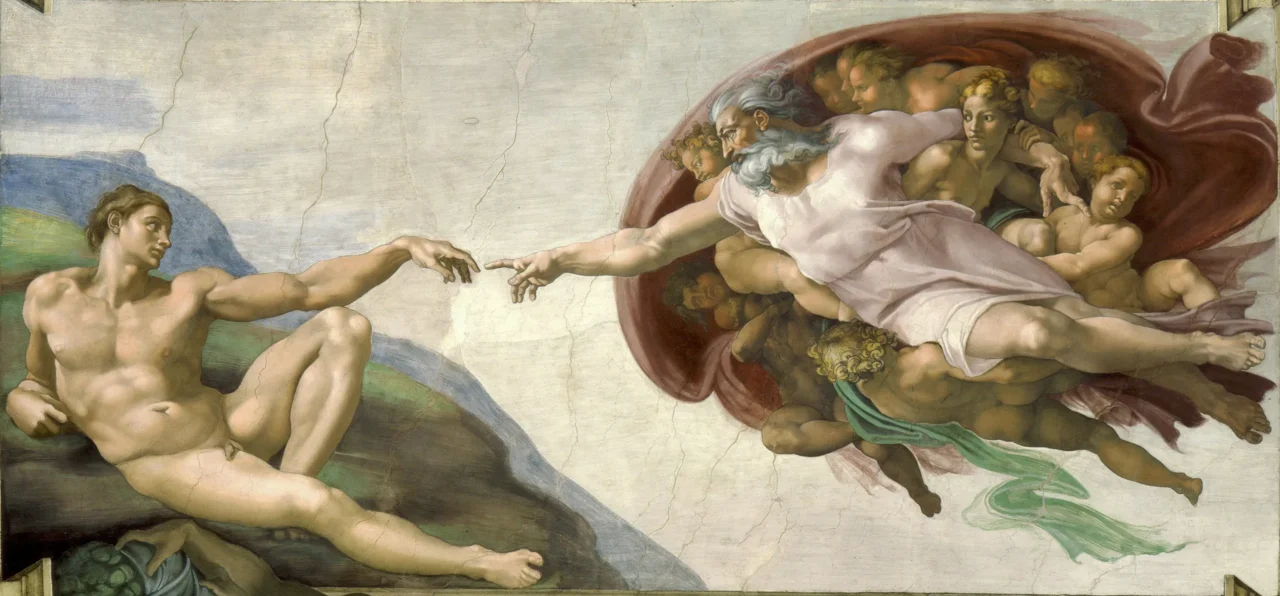
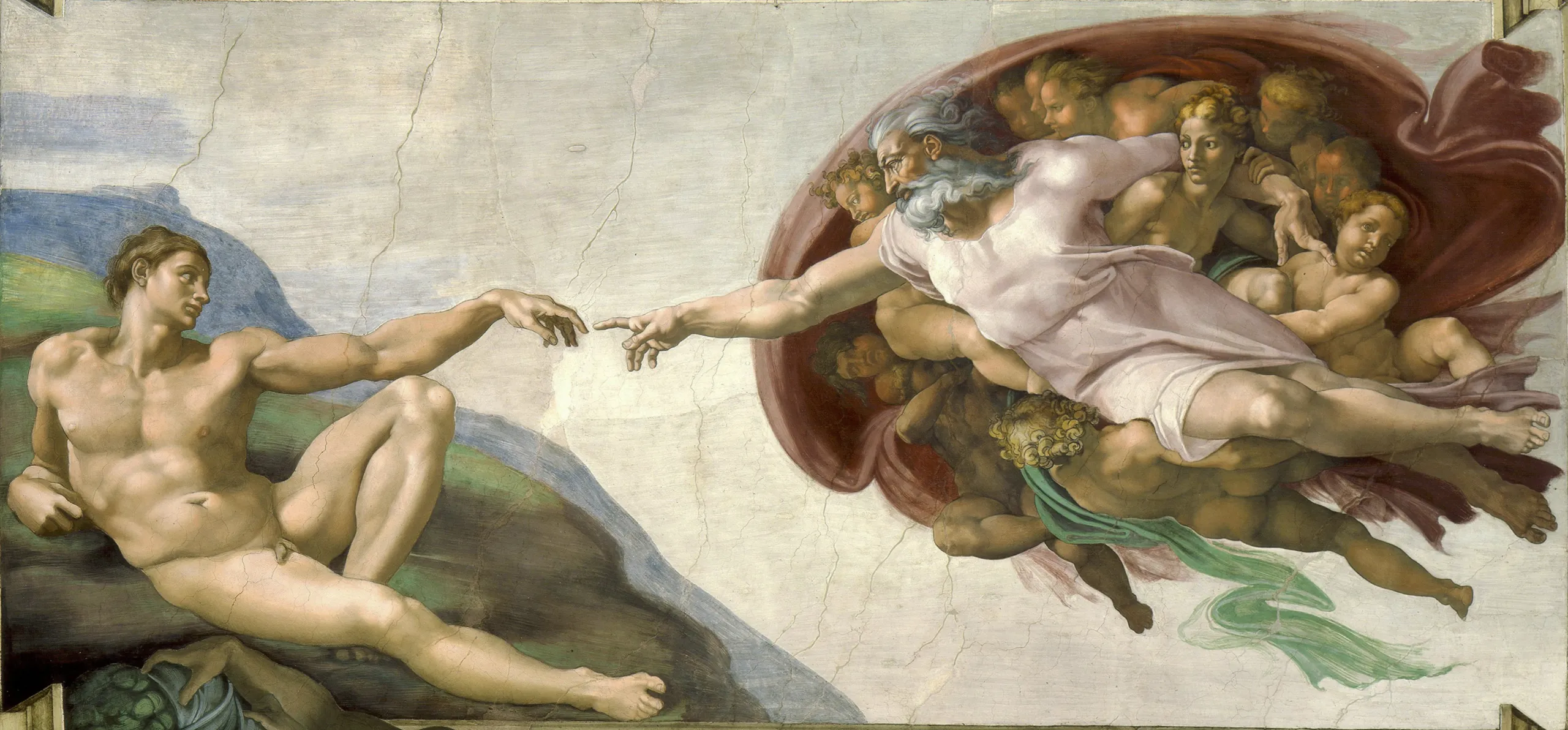
Michelangelo painted the famous fresco The Creation of Adam on the ceiling of the Sistine Chapel in 1511. He spent four years completing the entire ceiling, but the creation scene itself took just a few weeks. Yet this moment—where God’s finger almost touches Adam’s—became one of the most iconic images in all of art history.
That tiny gap between their fingers—the suspense, the anticipation—is what gives the painting its incredible power.
Of course, it’s a romanticized vision of creation. The Bible tells us it happened this way:
“God formed man from the dust of the ground, and breathed into his nostrils the breath of life, and man became a living being.” — Genesis 2:7
When Bishop Giovio saw the fresco in the 1520s, he was puzzled. He wrote, “Among the most important figures is that of an old man in the middle of the ceiling who is represented in the act of flying through the air.”
But beyond the mystery and the art, the painting delivers a clear message: there is no limit to the power of God. He can create something out of nothing.
Now imagine having a God powerful enough to do everything you ask of Him. That alone would be amazing. But what if He could do even more? What if He could do abundantly more? Or even exceedingly, abundantly more than anything you could ever ask or imagine?
The Bible says:
“Now unto Him who is able to do exceedingly, abundantly above all that we ask or think, according to the power that works in us.” — Ephesians 3:20
Now that’s a powerful God.
| Artist | Michelangelo |
| Title | The Creation of Adam |
| Production | 1511 |
| Material | Fresco |
| Dimensions | 570 cm (width), 280 cm (height) |
| Exhibit Location | Sistine Chapel |
| Accession Number | |
| Credit Line | |
| Image Credit | Wikimedia Commons |
 Written by Dr. Neale Schofield

 Discover life and faith through art — free email reflections from Dr. Neale Schofield, straight to your inbox.
Subscribe for free
Discover life and faith through art — free email reflections from Dr. Neale Schofield, straight to your inbox.
Subscribe for free
More from the Gallery
A Touch of Divine Power