




Caravaggio’s Reckoning: Pride, Humility, and Redemption
What have I made of my life?
Caravaggio’s life was a turbulent mix of genius and chaos. He began with incredible talent and promise, but was eventually undone by pride, arrogance—and even murder.
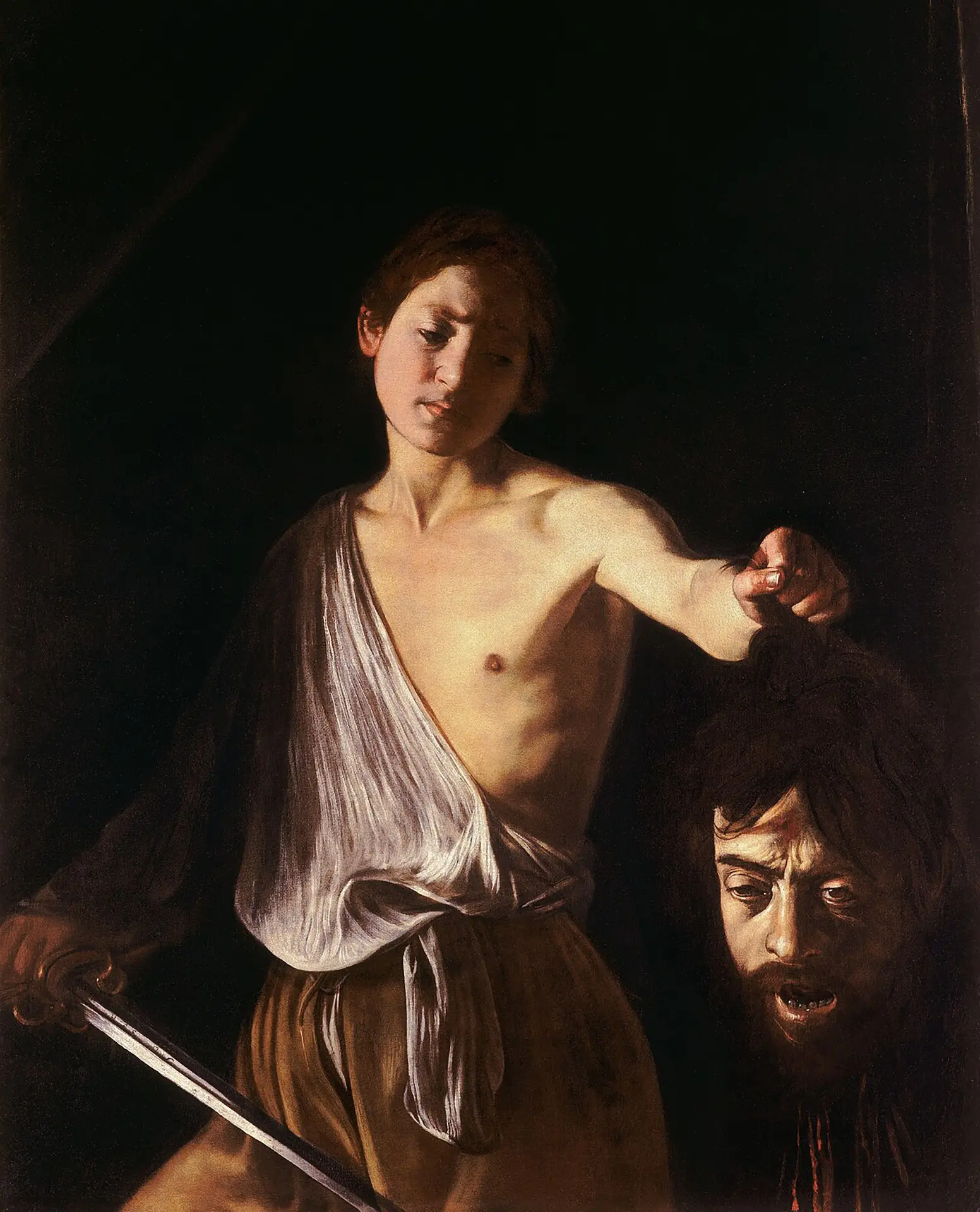
His painting David with the Head of Goliath, completed in 1610, is as brutal as it is compelling. At the center of the scene, David holds the severed head of Goliath, blood still dripping from the neck. But David’s expression is far from triumphant. Instead of joy or celebration, his face is marked by sorrow—almost as if he feels compassion for the one he’s just defeated.
Why?
Because Goliath’s face is a self-portrait. Caravaggio painted his own features into the severed head. Look closely—the face is hollow, broken, and filled with regret. On the sword used to slay Goliath is the Latin inscription H-AS OS, meaning “Humility kills pride.”
But there’s more. Some art historians believe that David, too, is a self-portrait—Caravaggio as a younger man. If that’s true, this painting becomes something even more profound: a confrontation between the young and old Caravaggio. The youthful David looks down at his older self—the slain Goliath—with quiet grief, mourning what pride and sin have done to him.
The Bible warns us:
“Pride precedes destruction, and an arrogant spirit before a fall.” — Proverbs 16:18
David, the biblical king, also had grave moral failures—adultery and even orchestrated murder. But unlike Caravaggio, David humbled himself. He repented and turned back to God. Caravaggio, by contrast, ran—from Rome, from his past, and from his guilt.
This painting isn’t just a depiction of David and Goliath. It’s a mirror, asking us to reflect on our own stories—our choices, our regrets, and our pride.
So the question stands: What have I made of my life?
The good news is this: no matter how far you’ve fallen, you don’t have to run from God like Caravaggio. You can run to God—like David.
| Artist | Caravaggio |
| Title | David with the Head of Goliath |
| Production | 1607 |
| Material | Oil on Canvas |
| Dimensions | 101 cm (Width), 125 cm (Height) |
| Exhibit Location | Galleria Borghese |
| Accession Number | 455 |
| Credit Line | |
| Image Credit | Wikimedia Commons |
 Written by Dr. Neale Schofield

 Discover life and faith through art — free email reflections from Dr. Neale Schofield, straight to your inbox.
Subscribe for free
Discover life and faith through art — free email reflections from Dr. Neale Schofield, straight to your inbox.
Subscribe for free
More from the Gallery
Caravaggio’s Reckoning: Pride, Humility, and Redemption