





The Uninterrupted Prayer
What can a simple act of saying grace teach us about gratitude and focus?
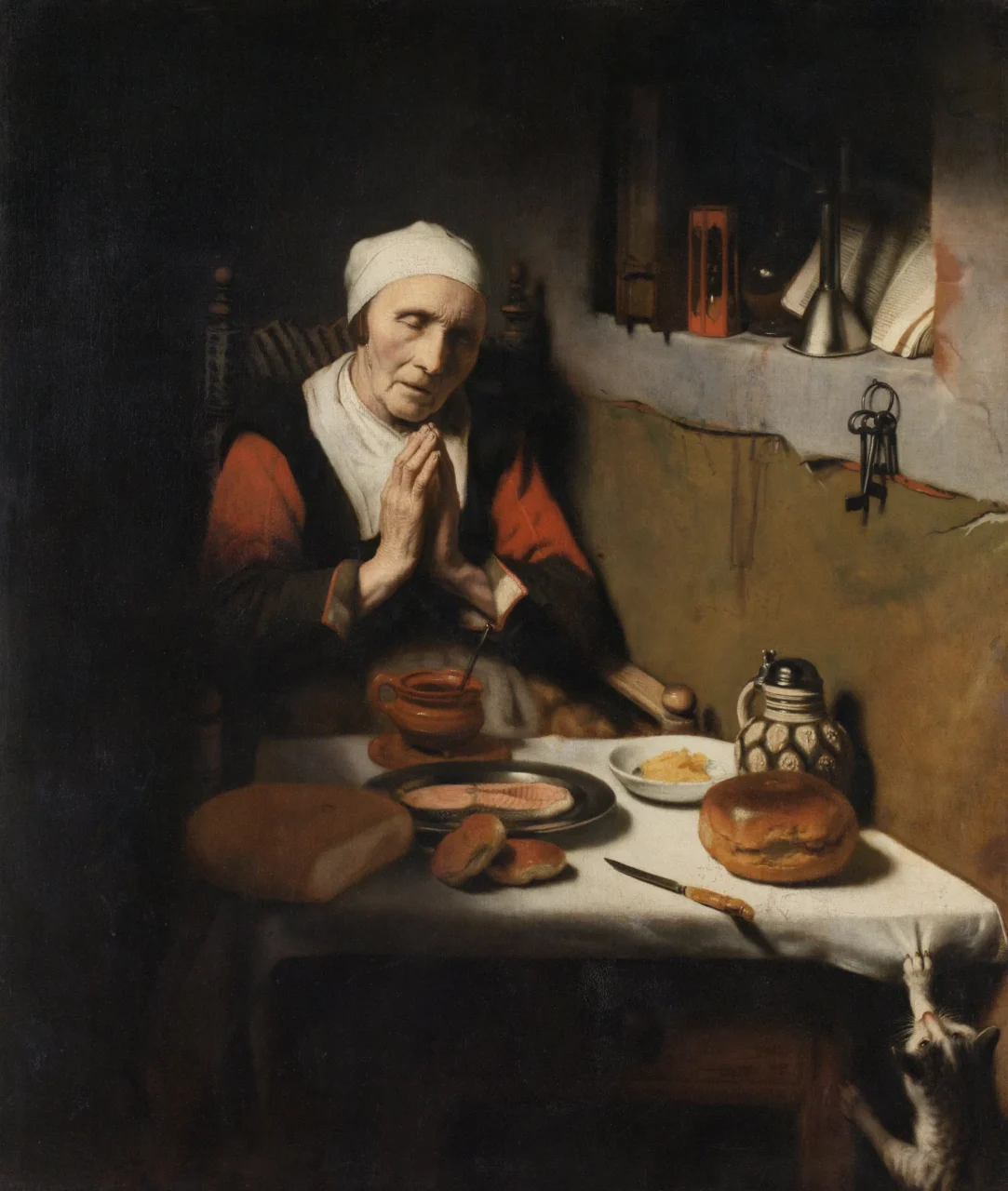
Hanging in Amsterdam’s famous Rijksmuseum is a quiet but profound painting titled Old Woman Saying Grace, created by Dutch artist Nicolaes Maes. Maes began apprenticing under Rembrandt at the age of 15, and by just 22, he produced this masterful piece—one that speaks volumes with its simplicity.
At first glance, the scene is humble. The old woman’s meal is modest: bread, porridge, butter, and a slice of salmon. Yet, it’s the small details that captivate the viewer. A cat, lured by the scent of fish, tugs at the tablecloth, desperate for a bite. It’s a playful moment, yet also deeply symbolic.
Despite the distraction, the woman remains entirely focused. Her hands are folded, her head bowed. She continues to pray, unmoved by the feline’s persistence.
In fact, the painting has also been titled Prayer Without End. Not because her prayer is long, but because her devotion is unshakable—even in the midst of minor chaos.
But where did this practice of saying grace originate?
While Jesus is often seen giving thanks before meals in the New Testament, the tradition goes back even further. In Deuteronomy, we’re told:
“When you have eaten and are full, then you shall bless the Lord your God for the good land which He has given you.” — Deuteronomy 8:10
What’s striking about this verse is that it calls us to gratitude after the meal as well—not just before. Thankfulness should permeate both our expectation and our satisfaction.
Modern science even echoes these ancient truths. Doctors now say that pausing to say grace can benefit our mental and physical health. It slows us down, aids digestion, and fosters mindfulness around the table.
So what can a simple act of saying grace teach us about gratitude and focus?
This painting reminds us that in a world full of distractions—whether they come in the form of cats or notifications—prayer remains our anchor. Saying grace isn’t just a religious ritual; it’s a moment of spiritual clarity. It helps us lift our eyes from the plate to the Provider, reconnecting us with Jesus, our closest companion.
| Artist | Nicolaes Maes |
| Title | Old Woman Saying Grace |
| Production | c. 1656 |
| Material | Oil on canvas |
| Dimensions | 113 cm (width), 134 cm (height) |
| Exhibit Location | Rijksmuseum |
| Accession Number | SK-C-535 |
| Credit Line | On loan from the City of Amsterdam |
| Image Credit | Rijksmuseum |
 Written by Dr. Neale Schofield

 Discover life and faith through art — free email reflections from Dr. Neale Schofield, straight to your inbox.
Subscribe for free
Discover life and faith through art — free email reflections from Dr. Neale Schofield, straight to your inbox.
Subscribe for free
More from the Gallery
The Uninterrupted Prayer