




The Two Prodigals: Journey from Indulgence to Grace
What happens when everything you built your life on suddenly crumbles?
In the Dresden Museum hangs an early Rembrandt painting titled Prodigal Son in the Tavern. In it, Rembrandt paints himself in the middle of celebration—smiling, relaxed, feasting with a woman, drink in hand. He’s enjoying the spoils of his success, revelling in the pleasures of the world. At the time, his art was making him wealthy and famous. He had every reason to feel on top of the world.
But that world didn’t last.
Over time, tragedy struck again and again. Rembrandt lost three of his children. He buried his beloved wife. Financial ruin followed. By the end of his life, the acclaim, the wealth, the parties—it was all gone.
So what did he do?
He looked beyond the ashes of his earthly success and recognised the emptiness of everything this world can offer. In his grief and brokenness, Rembrandt turned to God.
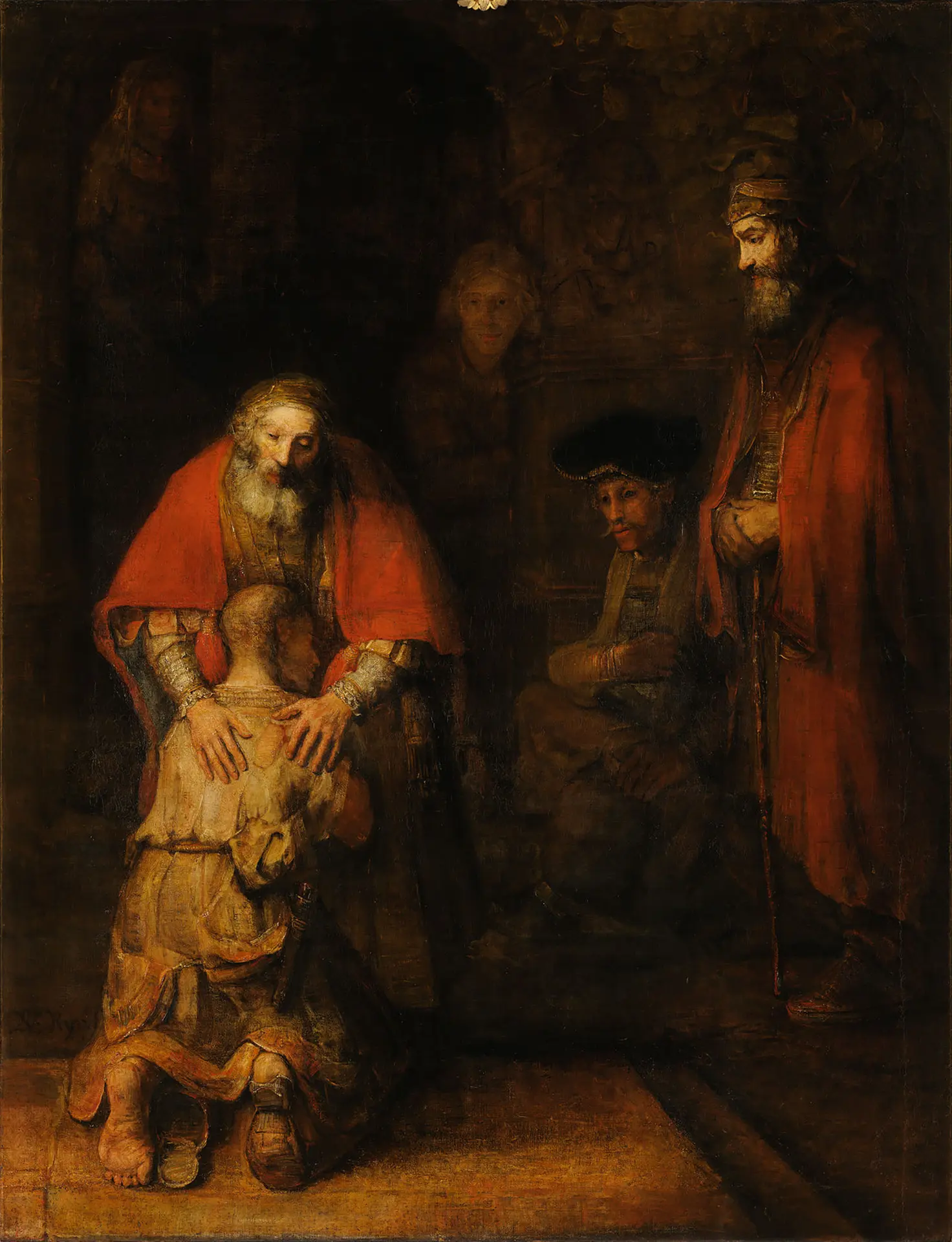
Years later, he painted another prodigal-themed work—The Return of the Prodigal Son. Today, it hangs in the Hermitage Museum in Saint Petersburg, and it reveals a very different side of the artist.
In this painting, an aged, nearly blind father bends low to embrace his kneeling son. The son’s head rests gently on his father’s chest. His clothes are torn, his sandals worn, his hair mostly gone. This son, in every way, is broken—and that son, scholars believe, is Rembrandt himself.
The contrast between father and son is striking. The father is clothed in rich red robes; the son in rags. But look closely at the father’s hands. One is large and strong, masculine. The other is soft, feminine. Rembrandt intentionally painted them this way to symbolise something profound: the dual nature of God’s love—both powerful and tender, full of justice and full of mercy.
This painting speaks volumes. It tells the story of failure, repentance, and unconditional grace.
There are two enduring truths that emerge:
First, no matter how brilliant, gifted, or successful you are, without Christ, it can all fall apart. Our own strength is never enough.
Second, and more importantly, we have a God who welcomes us home. A God who doesn’t wait for us to clean ourselves up or earn our way back. He runs to embrace us as we are.
So, what happens when everything you built your life on suddenly crumbles?
If you’re willing, it can lead you home. Like Rembrandt, you can return—and find in the arms of God a love that never left.
| Artist | Rembrandt |
| Title | Prodigal Son in the Tavern |
| Production | 1668 |
| Material | Oil on Canvas |
| Dimensions | 205 cm (Width), 262 cm (Height) |
| Exhibit Location | Hermitage Museum |
| Accession Number | 742 |
| Credit Line | |
| Image Credit | Wikimedia Commons |
 Written by Dr. Neale Schofield

 Discover life and faith through art — free email reflections from Dr. Neale Schofield, straight to your inbox.
Subscribe for free
Discover life and faith through art — free email reflections from Dr. Neale Schofield, straight to your inbox.
Subscribe for free
More from the Gallery
The Two Prodigals: Journey from Indulgence to Grace